
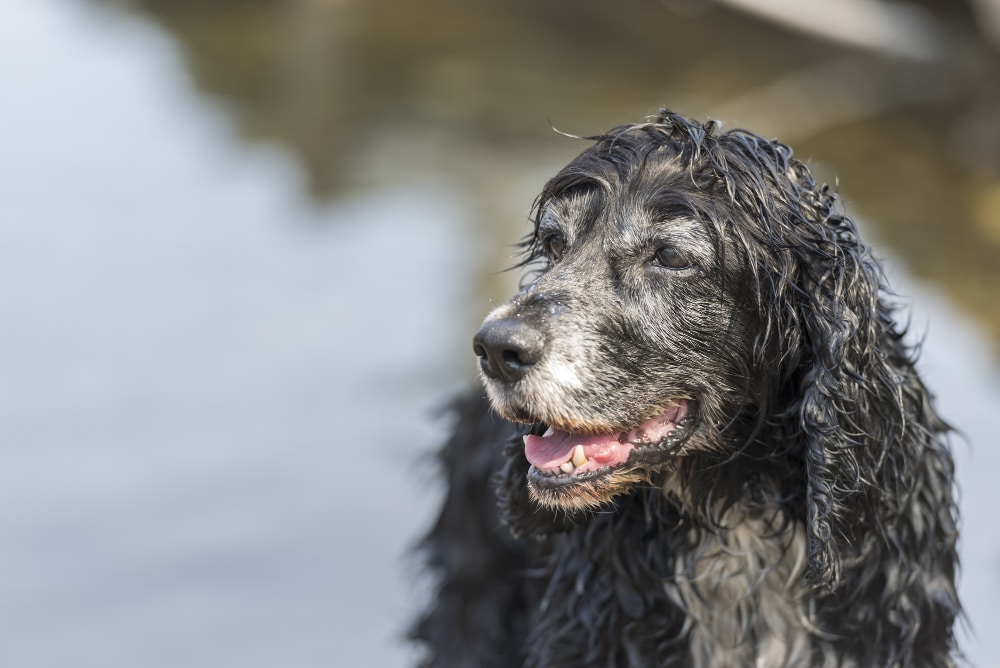
Your dog or cat turns eight. Their whiskers might be going a little grey, and they’re still the best pet in the world. Then your insurance policy starts a new term, and with some pet insurers, the premium isn’t the only number that’s moved. Your share of every eligible vet bill can go up too.
Some policies make you pay a bigger share of each vet bill once your pet passes a certain birthday. Others leave room for the insurer to raise your share as your pet gets older, without saying exactly when or by how much. Either way, you could get less back when you claim, just as your pet heads into their senior years.
Here’s what to look for, how the maths works and where PD Insurance sits.
In this article

Estimated reading time: 8 minutes
Two ways you pay part of the bill
An excess is a set dollar amount you pay when you claim. A co-payment is a percentage of the bill you pay yourself. Some policies have both.
You’ll often see the word eligible, as in “eligible vet costs”. It just means the parts of your vet bill your policy covers. Things like pre-existing conditions, or treatment during a waiting period, may not be covered, so they don’t count.
Insurers don’t all use the same names. A percentage you pay might be called a share excess, an age excess or an age contribution. Check what your policy calls it.
The order things come off the bill matters, too. Here’s a $3,000 vet bill with a $250 excess taken off first, then a 20% co-payment:
-
Start with the bill$3,000.00The full bill (assuming it’s all covered)
-
Take off the excess$2,750.00$250.00 comes off first
-
Take off the co-payment$2,200.0020% of $2,750.00 is $550.00
You get $2,200 back and pay $800 yourself: the $250 excess plus the $550 co-payment. That’s just over a quarter of the original bill, out of your pocket.
Example only. This assumes the whole bill is covered and you haven’t reached your cover limits. Your policy may work it out differently, and exclusions and limits can change what you get back.
To be fair, a co-payment can be a fair trade if it makes your insurance cheaper. The real question is whether that percentage can go up later.
Eight candles: 20%. Ten candles: 35%
One New Zealand pet insurer adds an extra percentage you pay, called an age contribution, once your pet reaches certain birthdays. For dogs on its select-breed list, it starts earlier.
With this insurer, a renewal is when your policy starts a new year of cover. So the change doesn’t start on the birthday itself, but at the next renewal after it. If your pet turns eight in March and your policy renews in August, the 20% would start in August.
This percentage is worked out after your excess and anything else you pay has already come off the bill, including any co-payment you already have. When 35% kicks in, it replaces the 20%. You don’t pay both.
What does that mean in dollars? Here’s the same $3,000 bill. We’re assuming it’s all covered, there’s a $250 excess (just an example) and no other percentage to pay.
-
No age contribution$2,750.00(91.7%)You pay $250.00: just the excess
-
20% age contribution$2,200.00(73.3%)You pay $800.00: $250.00 excess plus $550.00 age contribution
-
35% age contribution$1,787.50(59.6%)You pay $1,212.50: $250.00 excess plus $962.50 age contribution
Same bill. Same pet, just older. With nothing else changed, you’d get $962.50 less back at 35% than with no age contribution at all.
This shows how the maths works, not what a specific plan pays. It assumes the whole bill is covered, a made-up $250 excess, no other percentage to pay and that you haven’t reached your cover limits. The age contribution comes off after the excess. Percentages show how much of the original bill you get back.
Not every policy spells it out
Another insurer’s policy says your co-payment may change at a future renewal as your pet gets older, and that you’ll be told beforehand. It doesn’t say at what age or by how much. So it could change, but that doesn’t mean it will for everyone.
And age isn’t the only trigger
A third insurer’s general cat and dog policy says you pay:
- 40% for treatment by a specialist vet
- 50% for long-term, ongoing or recurring conditions
- 50% for all treatment once your pet is ten or older.
Your usual percentage is listed in your policy schedule (the summary of your cover), and you may also have to pay a minimum dollar amount. These rules vary from product to product.
Why a growing percentage bites harder than it looks
Percentages scale. The bigger the eligible bill, the bigger your dollar share.
Say there’s no excess. Paying 20% of a $3,000 covered bill costs you $600. Paying 50% costs you $1,500. That’s an extra $900 out of your pocket on one bill, before anything else comes off.
And it doesn’t stop at one claim. If your pet needs ongoing treatment, it can happen claim after claim. Check what percentage you pay, how often you pay the excess and whether there’s a cap on how much the policy pays for that condition.
When you’re comparing policies, look at both the price and what you’d pay when you claim. A cheaper monthly price is only half the story.
The other age hurdle: getting in at all
Age can also decide which policies are open to you in the first place.
Age limits depend on the insurer, the plan and sometimes the breed. And the age limit for taking out a new policy is different from the rules for keeping one you already have.
Among the policies we looked at, some only accept select-breed dogs that join before their fifth birthday, while other plans have no upper age limit to join. If one plan has an age limit, that doesn’t necessarily mean the insurer has nothing for an older pet.
For select-breed dogs older than six, only the Accident plan is available (acceptance criteria and policy terms apply).
Adopting an older pet? Brilliant. Before you sign up, check which plans are open to their age and breed, what those plans cover and how pre-existing conditions (health issues they had before cover started) are treated. That way you can plan for any vet costs you might need to pay yourself.
Four things to look up in your own policy
Searching your policy PDF can help you find the relevant clauses. Use these terms as a starting point, then Grab your policy PDF and hit search. Policies tend to use the official terms, so these are the words to look for. Read what you find alongside your policy schedule and renewal documents.
- “Co-payment”, “contribution” or “share excess”. What percentage do you pay? Is there also a minimum dollar amount or an excess? Check what order they come off the bill.
- “Age” or “age excess”. Does your percentage change at a certain age or renewal? Does the policy say the insurer can change it later?
- “Chronic”, “ongoing”, “recurring” or “specialist”. Do you pay more for certain conditions or types of treatment? Also check for caps on how much they’ll pay, or for how long.
- “Select breed”, “listed breed” or similar. Does your dog’s breed change the age limits, what you pay or anything else? Check the insurer’s actual breed list rather than guessing.
Still not sure? Ask your insurer directly whether the percentage you pay can increase because of your pet’s age, treatment or condition. Ask when any change would take effect, and get the answer in writing.
Where PD sits
PD doesn’t use a percentage co-payment or an age contribution, which makes your claims easier to predict. Your pet’s age and breed affect your premium, but the way we work out a claim doesn’t change as your pet gets older. There’s no percentage waiting to kick in at a particular birthday. All the more reason to get out the cat or dog birthday cake.
There’s more to like, too:
- You can get 1 month free when you sign up.
- We aim to settle claims within two business days of receiving all the paperwork.
- We don’t do lock-in contracts, meaning you can cancel at any time.
Why not get a quote today?
Comparisons in this article are based on the insurers’ latest publicly available policy documents as at October 2026. They describe specific provisions rather than every feature of each policy. Policy terms can change, so check the wording and schedule that apply to your cover.