
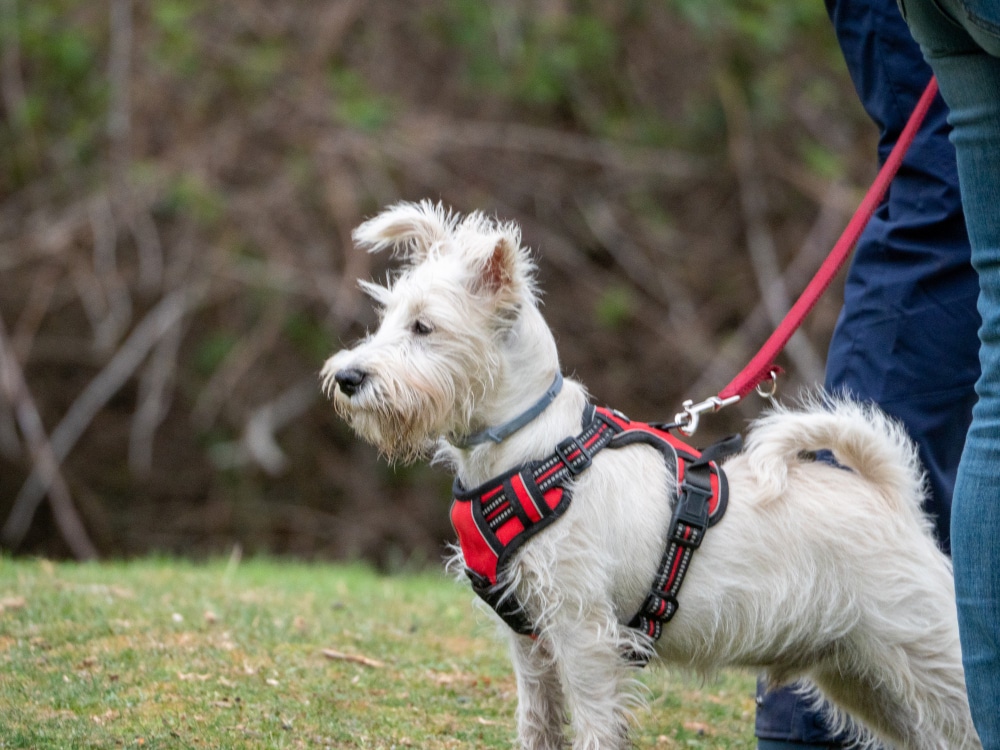
Did you know that 90% of Kiwis say they consider their pets when deciding to travel or not? Many of us take our fur family along when we’re out on the road, but how many of us use a ‘seatbelt’ in the form of a cat or dog car harness? What about a travel crate?
If humans need to buckle up, then surely pets do, too? But how are you meant to safely secure them, and what does the law say about cats and dogs in cars. We take a look.
In this article
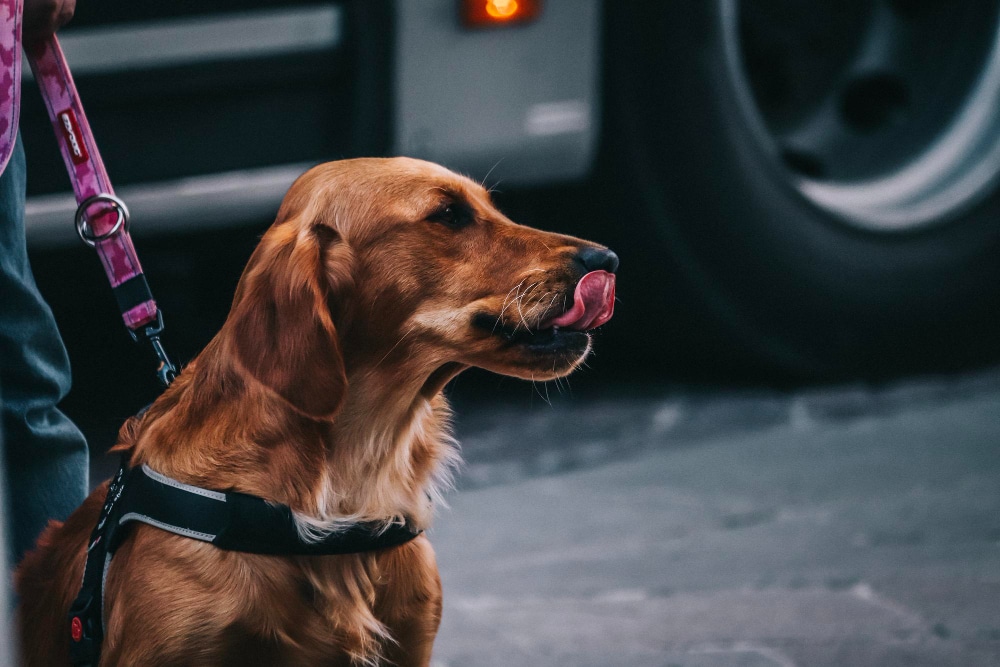
Do dogs legally need car harnesses/seats?
The law doesn’t explicitly state that you need to use a dog seatbelt or harness when your dog is in an enclosed vehicle, but it does state that anything you hold or carry in your lap must be restrained so it can’t cause danger.
However, dogs face the same dangers in cars that we do. In a crash or sudden stop, an unrestrained dog can be thrown against windows, seats, or even ejected from the vehicle – which can be fatal.
It’s important to note that dogs transported in an open deck, ute tray, trailer or similar on a public road, must be secured by law so that they cannot fall off or hang off the vehicle.
An awful case in 2021 saw a Staffordshire Terrier thrown from an open ute in far North Queensland, Australia. The owner was oblivious to what happened.
Luckily the dog survived.
Dogs in cars – the second hazard
There’s a secondary reason why you should use a dog car harness, seat or crate – and that’s for your safety, too. In a car crash or sudden stop a dog can become a projectile that can severely injure you or others.
Melanie Monteiro is a dog safety coach and author of “The Safe Dog Handbook: A Complete Guide to Protecting Your Pooch Indoors & Out” who says:
“Dogs who aren’t properly restrained pose great risks to human passengers in the event of a sudden stop, swerve or accident. In the event of a crash at 50 mph (80 km/h), a 10-pound (4.5 kg), unrestrained dog generates 500 pounds (227 kg) of projectile force. In a 30-mph (48 km/h) crash, an 80-pound (36 kg) dog would become a 2,400-pound flying projectile (1,089 kg).”
Also, a roaming pup can interfere with your driving, divert your attention, or block your view.
Choosing a harness or car seat
So how does one ensure your pup is safe in the car? The best way is to purchase them a specifically designed crash-tested car harness that you then attach to your car’s human seatbelt.
If your pup is smaller, you can get them an additional dog car seat or booster seat to raise them up. This lets them look out the window – which can make them less anxious or car sick.
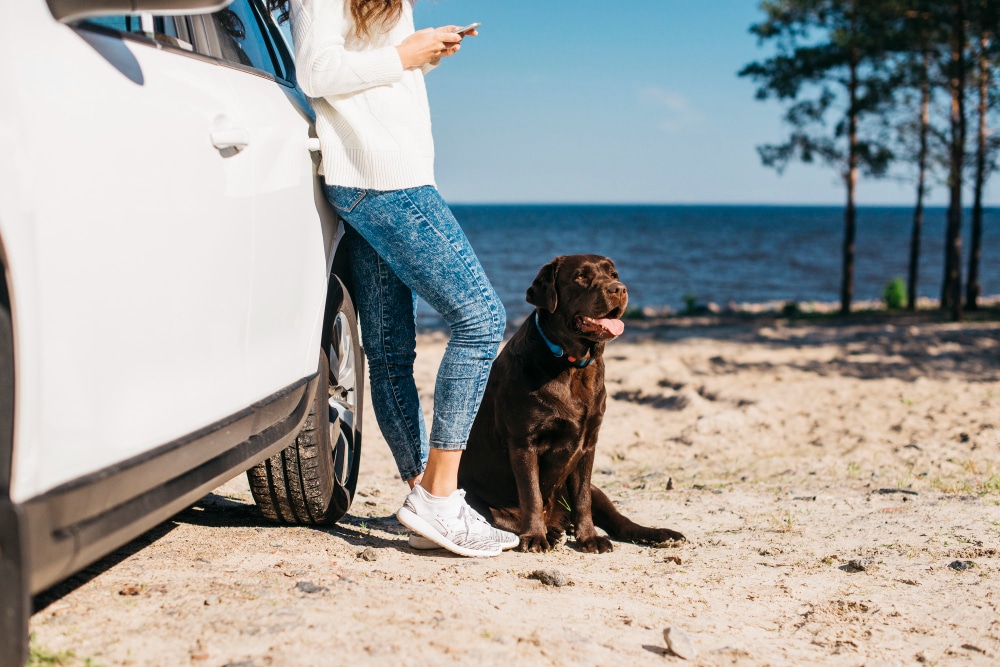
Dog car harness 101
A dog car harness is a good way to secure larger dogs when you’re driving. Instead of clipping onto a collar, which can be dangerous in an accident, the harness spreads any pressure across the dog’s chest and shoulders, making it far safer and more comfortable.
Many harnesses attach directly to your car’s seatbelt system. This means your dog stays in place rather than sliding around or distracting you while you drive. The best ones are adjustable to fit snugly and often padded for comfort. They’re made from sturdy materials that can handle sudden stops. A bonus is that a lot of car harnesses double up as walking harnesses too, so you don’t have to faff with switching gear.
Dos
Always secure your dog in the backseat
The safest spot for your dog is almost always the back seat rather than the front. This keeps them away from airbags, which can injure or kill pets if deployed.
Do use a car harness, not a standard harness
A normal walking harness is made for lead training and comfort, not for car safety. Most haven’t been crash-tested, so the buckles or stitching can break in a sudden stop or accident. This can throw your dog forward or cause the harness to twist, leading to injury.
Do use a crash-tested harness
Opt for a dog car harness that’s been crash-tested. Some options include the EzyDog Drive Safety / Car Harness (can be found on Animates) and the CarSafe Crash Tested Dog Harness from Petworkz NZ.
Don’ts
Don’t use a collar instead of a harness
Never fasten your dog to your seatbelt via their neck collar. This can cause severe injury if you brake suddenly. Always use a harness that more evenly spreads the pressure around their chest.
Don’t forget about comfort
Long straps, heavy buckles, or rough edges can rub during a drive. Make sure your dog can sit, stand, and lie down comfortably.
Don’t expect one size to fit forever
Puppies grow, older dogs lose weight, harnesses stretch. Re-check the fit every few months to keep your pup safe.
Dog car seat 101
As mentioned, smaller dogs who are too short to look out of a the car window often enjoy an extra booster seat. In addition to wearing a crash-tested dog car harness, the car seat raises them up and makes them more comfortable.
Most are designed to attach to the seat and then connect to your dog’s harness with a strap. This means they can’t jump out or move around too much.
Many come with cushioned sides and soft lining and they’re often removable and washable. It’s importat to install it according to the manufacturer’s instructions. Make sure it’s anchored to the car’s seatbelt or ISOFIX points. A loose dog car seat can become a projectile in a crash.
Dog travel crate
If your dog is crate trained, a properly sized, sturdy crate that’s secured to the vehicle is another sound option. It will protect your dog in a collision by containing them and reducing the risk of them becoming a projectile. Some brands, like Gunner Kennels and Variocage are crash-tested for automotive use.
However, keep in mind that your pet can still be thrown against the sides of the crate during a collision. The crate should be big enough for your dog to stand, turn and and lie down. But not so big that they can slide across it in a collision.
Crates are also ideal for travelling with cats – as most cats may not tolerate a harness.
Insurance for the unexpected
As safe as we try to keep our pups, accidents and unexpected illnesses can happen. Vet bills can run into thousands of dollars, which can leave you in a financial predicament if you don’t have savings.
That’s where pet insurance comes in. PD Insurance offers a choice of three plans that help you pay for unexpected vet bills. PLUS, if you sign up now you can get 1 MONTH FREE dog insurance or cat insurance.