
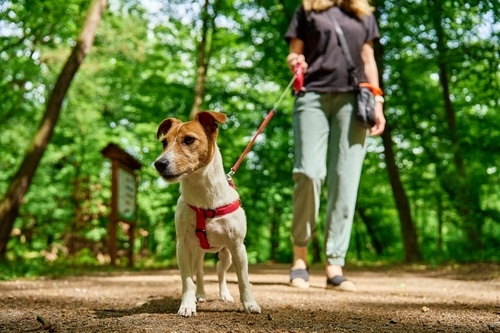
The Dog Control Act review is getting plenty of attention in New Zealand, and for good reason. Reports of serious dog attacks have made headlines, and there are concerns about roaming dogs in some communities. In fact, a recent PD survey found that 7 out of 10 Kiwis have had interactions with dogs that felt unsafe.
Nearly 30 years after the Dog Control Act was introduced, the review aims to explore what need to change to keep people safe while supporting responsible dog ownership. Here’s a lowdown on the why and what.
Estimated reading time: 5 minutes
In this article
What is the Dog Control Act?
New Zealand’s Dog Control Act of 1996 sets the rules for owning and managing dogs and is designed to keep people, animals, and communities safe.
It covers things like registering your dog, keeping them under control, making sure they’re well cared for, rules for dogs in public places and what happens if a dog is dangerous or attacks. Local councils are responsible for enforcing these rules.
Why is it being reviewed?
The Dog Control Act review is happening because Councils, animal welfare groups, public health experts and the Government feel the law no longer matches the reality of owning a dog today.
A big trigger was a series of serious dog attacks, including fatal incidents, which sparked public concern about roaming and uncontrolled dogs. The Government said people should be able to walk in their neighbourhoods or take their kids to parks without fearing dog attacks.
Another major issue is that councils argue they don’t have strong enough powers to intervene before a situation becomes dangerous.
They say the current law makes it difficult to deal with roaming dogs, repeat offenders and high-risk situations, while also putting pressure on already stretched animal management resources.
There’s also growing evidence that we’re seeing more dog related injuries. As mentioned, PD’s recent Pet Trends 2026 survey of over 1,100 respondents found that 7 out of 10 respondents had had interactions with dogs that felt aggressive or unsafe.
And public health researchers reported more than 29,000 Accident Compensation Corporation (ACC) claims and over 1,000 hospitalisations related to dogs in a recent year. They argue that stronger prevention measures are needed.

What does the Dog Control Act review mean for you?
So, how will these new measures affect you as a dog owner? From the looks of it, these measures are clearly there to support responsible dog ownership, and should technically make things better for dogs and people.
Stricter rules and penalties
There may be tougher consequences for owners who don’t control their dogs properly, especially in cases of attacks or repeated issues. This could mean higher fines or stricter enforcement.
Possible desexing requirements
There’s discussion about expanding desexing rules, particularly for certain dogs or situations, as a way to reduce aggression and unwanted breeding.
Clearer and more consistent rules
Right now, councils can apply rules differently. The review may lead to more national consistency, so dog owners face the same expectations no matter where they live.
Tighter controls on breeding
There may be new or stronger rules around dog breeding, especially to reduce irresponsible practices and puppy mills.
More education for owners around dog fights and behaviour
A big part of the review is improving understanding of dog behaviour. Owners might be expected to be more informed about how to manage and respond to their dog’s behaviour, which could curb aggressive incidents.
Our Pet Trends 2026 survey found that 58.8% of pet owners think responsible ownership is the most important aspect of preventing dangerous behaviour in dogs, followed by early socialisation and consistent training.
Healthy Pets New Zealand (HPNZ), a Prinicpal Partner of PD, echoed the need for socialising dogs:
“Many dog behaviour problems start early, during the socialisation period. Doggie daycare and similar initiatives allow both socialisation and owner education and have a large positive impact. In addition to the need for outdoor spaces for dogs, healthy homes (warm, dry) are also important for cat and dog health – these initiatives are aimed at improving human health but have impacts on animal health too.” – Hayley Hunt, HPNZ
Companion Animals NZ comments on the Dog Control Act review
Companion Animals New Zealand (CANZ) supports the Government’s review of the Dog Control Act, but believes some areas need more attention.
Its main concerns are:
- Any changes should be based on evidence and research, not just a reaction to recent dog attacks.
- Dog-related incidents are not only about the dogs themselves. Owner behaviour, education and community awareness also play an important role.
- Education should be a key part of any reforms. CANZ says teaching people how to understand dog behaviour and warning signs could help prevent incidents.
- More focus should be placed on preventing problems before they happen, rather than only responding after an attack or incident has occurred.
CANZ believes the biggest improvements will come from prevention, education, responsible ownership and policies based on scientific evidence.
Pet insurance by pet people
Despite our biggest efforts, accidents and illnesses can still happen to our beloved pets. And when they do, vet bills can run into thousands of dollars.
PD is an award-winning brand* that offers pet insurance to soften the financial blow in their hour of need. Investing in a pet plan early on helps set your pet up for lifelong cover. PLUS you get 1 month free when you sign up.
Why not get a quote today?
*PD Insurance is the winner of the 2023 and 2026 MoneyHub Editor’s Choice Favourite Pet Insurer Award, 2024 Reader’s Digest Silver Pet Insurance Award, and 2022 Canstar Most Satisfied Customers Award for Pet Insurance.