
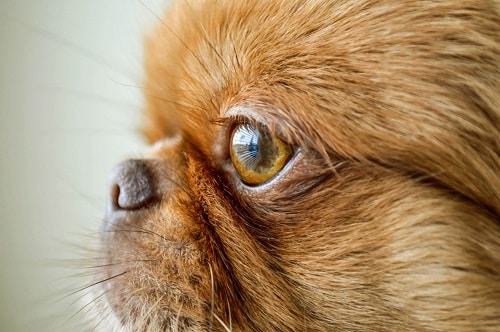
Ever noticed your dog having ‘boogers’ in their eyes? Every now and again probably isn’t anything too serious, but extremely gunky eyes can mean an infection or dry eye in dogs. Dry eye syndrome in dogs is uncomfortable for your pup and you’ll want to get it treated ASAP. Below, we look at exactly what it is and how to treat it, plus natural remedies for dry eye in dogs to use in conjunction with your vet’s treatment.
As always, consult with your vet about any remedies you plan to use to ensure they’re safe for your dog and don’t clash with any existing medications.
In this article
What’s dry eye in dogs?
Dry eye, also known as keratoconjunctivitis sicca (KCS), is a condition in dogs of any age where their eyes don’t produce enough tears to keep them moist and healthy. Tears play an important role in lubricating the eyes, flushing away dust and other foreign particles, and bringing essential nutrients and oxygen to the cornea.
When a dog has dry eye, the lack of tears can lead to inflammation, irritation, and damage to the cornea, which can result in discomfort, redness, and even vision loss.
Dry eye can be caused by a variety of factors, including autoimmune diseases, infections, trauma, and certain medications. Some breeds, such as the Cavalier King Charles Spaniel, are more prone to developing dry eye than others.
How does your vet diagnose dry eye syndrome in dogs?
You vet may do any, or a combination, of the following tests to determine if your pup has dry eye:
Physical examination
Your vet will examine your dog’s eyes for signs of dryness, inflammation, and damage to the cornea. They may also check for other underlying conditions that could be causing dry eye.
Schirmer Tear Test
The Schirmer Tear Test is a diagnostic test that measures tear production in the eyes. A small strip of paper is placed in your dog’s lower eyelid, and the amount of tears produced is measured after a set amount of time. If tear production is lower than normal, it may indicate dry eye.
Fluorescein staining
This test uses a special dye to help visualise damage to the cornea. The dye is placed in the eyes, and your vet will use a special light to examine your pup’s eyes for signs of damage or abrasions.
Blood test
In some cases, your vet may do a blood test. This is to check for underlying medical conditions that could be causing dry eye, such as autoimmune diseases.

Treatment for those tired eyes
The treatment for dry eye syndrome in dogs typically involves the use of medication to stimulate tear production and lubricate the eyes. Here are some common treatments for dry eye in dogs:
Cyclosporine eye drops
This is a medication that can stimulate your dog’s eye to make more tears and reduce inflammation in the eyes. It’s typically given as an eye drop once or twice a day.
Tacrolimus eye drops
Tacrolimus is another medicated eye drop that can stimulate tear production and reduce inflammation in your dog’s eyes.
Artificial tears
Lubricating eye drops or ointments can help give your pup temporary relief of dryness and discomfort. They’re often used in conjunction with other medications.
Antibiotics
If dry eye is caused by an underlying bacterial infection, your vet may prescribe antibiotics. This will treat the infection and lessen inflammation.
In some cases, surgical options may be necessary if medication alone is not effective in treating your pup’s dry eyes. Surgery may involve removing the gland of the ‘third eyelid’. Your vet may also be able to transplant a salivary gland into your dog’s eyes to produce tears (yes, they really can do that!)
Dry eye in dogs – natural remedies?
There are no guaranteed natural cures, but some natural remedies for dry eye in dogs may help manage the symptoms. Remember to always do your research and chat to your vet before trying any new remedies.
Why is that? It may surprise you to learn about seemingly harmless natural things that are toxic for pets. Along these lines, read our Are Essential Oils Harmful to Cats and Dogs? and Poisonous Plants to Keep Away from Pets articles plus this guide of toxic plants and flowers for pets.
Omega-3 fatty acids
Adding omega-3 supplements to your pup’s diet may help with dry eye. Found in fish oil and other sources, it’s known to help reduce inflammation and improve tear production.
Coconut oil
Coconut oil is a natural moisturiser that can help lubricate the eyes and reduce dryness. Apply a small amount to your dog’s eyes daily to give them relief.
Chamomile tea
Chamomile tea has anti-inflammatory properties and you can use it as a natural eye rinse to lessen inflammation and irritation. Brew a cup of chamomile tea and let it cool. Then use a clean cloth or some cotton wool to apply it to your dog’s eyes.
It’s important to note that natural remedies for dry eye in dogs should be used together with treatment from your vet. It’s not a substitute for professional care! This video shows more natural remedies:
More reading for your dog’s eyes and ears
While you’re researching dry eye in dogs, why not go beyond? Read these articles too:
The need for insurance is crystal clear
Dry eye syndrome in dogs is just one of the maladies that can send you and your pup to the vet. Allergies, injuries, or swallowing something they shouldn’t are all unexpected parts of being a pet parent.
The last thing you want to do is worry about your finances while you’re worrying about the health of your pup. Thankfully you can safeguard them with dog insurance. Having a pet plan means peace of mind you’ve got your pet’s back and you can get them medical care for unexpected incidents and illnesses.
PD Insurance gives you one or more months of FREE pet insurance when you buy online. Click below to get a quote today.