
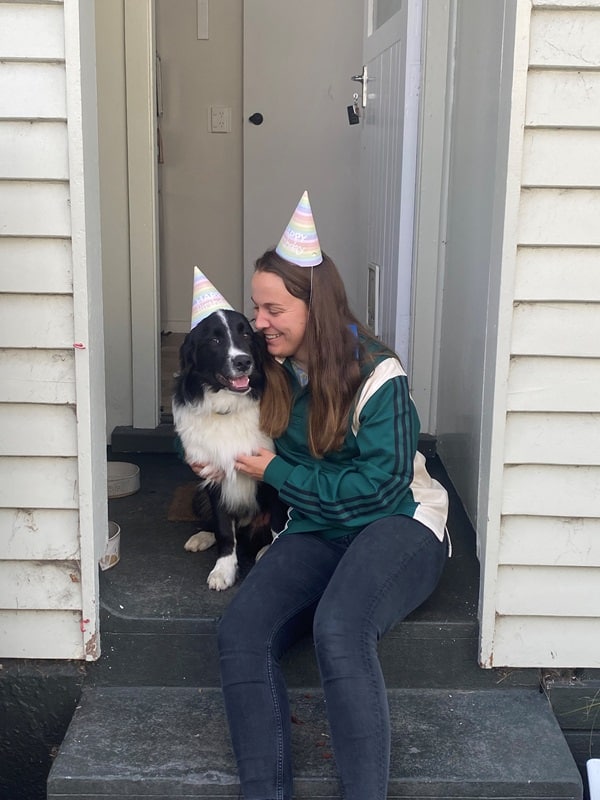
Nelson is a Border Collie puppy from West Auckland who was hit by a car after he escaped a gated area. Luckily, this brave pup survived and is thriving again. But it took intense surgery and 8 weeks of crate rest to get him fully back in action.
We talk to his adoring pet parent Jacqueline about his accident and recovery. We also share tips and answer some frequently asked questions on how to make crate rest easier for dogs. Let’s pounce in!
In this article
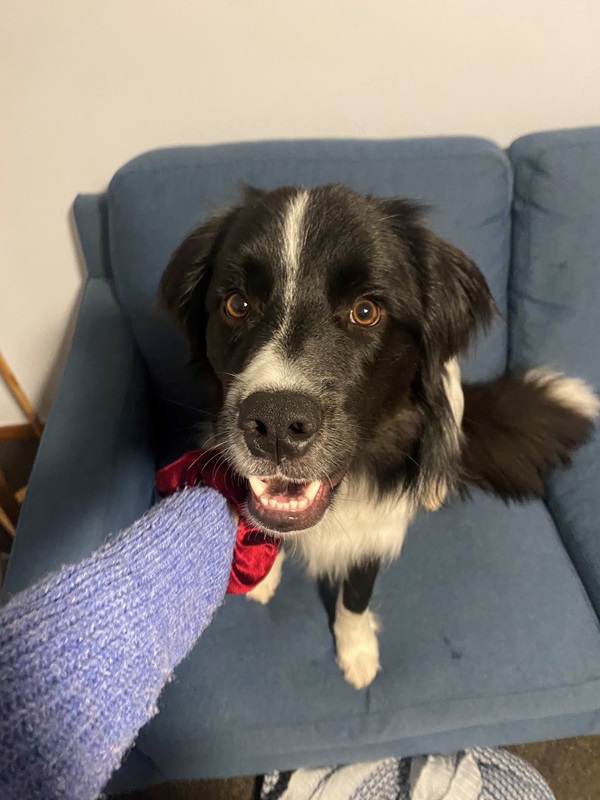
Meet Nelson
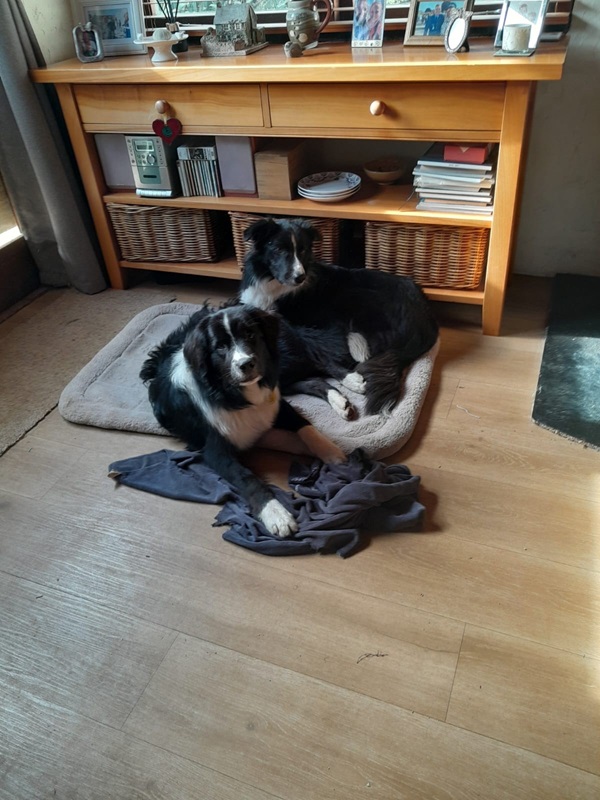
Nelson is an 11-month old Border Collie from West Auckland who joined his human family at 3 months old. He doesn’t live with other dogs or animals but is extra close to his cousin, Scout – also a Border Collie.
“Scout is a bit wiser so is able to teach him tricks,” says Jacqueline. ” Standing in front of the dishwasher and not licking plates means you get a sweetie (Mutt Butters are always the choice!)”
Jacqueline says they bought Nelson because her partner is deployed with the military: “He’s super special as he helps to fill that gap and provide company to me and helps me get out of the house. “
This includes going on runs, walks, hikes and beach trips.
“He just loves to play. Where there are people, he wants to be!” Says Jacqueline.
Nelson’s accident
Nelson and Jacqueline were out running their usual route one Friday, when Nelson managed to escape out of the gated area they were in.
While he was sitting and waiting for Jacqueline to reach him, he got hit by a car.
“Luckily he wasn’t run over, but he was hit,” Says Jacqueline. She feared the worst and immediately rushed him to the vet.
At the vet, X-rays showed that the collision had caused his femur and hip to dislocate and also broke some bone in the ball and socket.
As this happened on Friday just as their vet was closing, the vet and staff stayed behind late to stabilise him. Nelson would need greater trochanter fracture surgery on his hind left leg.
He was then transferred to the Animal Referral Centre where had to have specialised surgery with an orthopaedic surgeon, who Jacqueline describes as ‘absolutely amazing’.
“He was in hospital Monday to Tuesday. I was told that while at the vet, staff would sneak in to give him a cuddle as he justed wanted so much attention – this is nothing new! He just loves human attention!” Says Jacqueline.
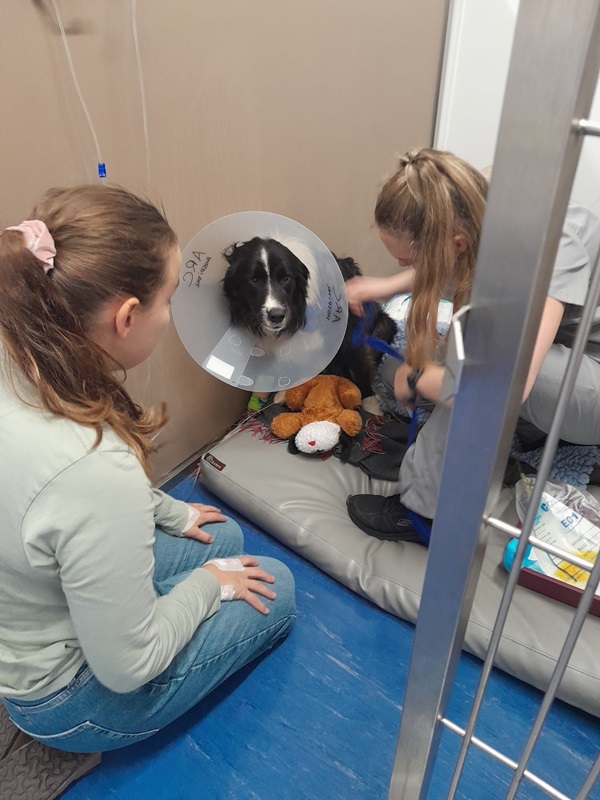
Nelson’s recovery and crate rest
After the surgery, Nelson needed help to walk as he couldn’t use his left leg properly. The vet was concerned and they even considered amputation. Luckily the sciatic nerve was just swollen.
Nelson was under strict instructions not to run or jump after his surgery and was put on dog crate rest for 8 weeks. A tough ask, considering he’s a highly energetic Border Collie puppy,
“He really did want to jump, especially as the pain wore off,” says Jacqueline. “Thank goodness for the tablets to help settle him – otherwise his pins would not have all stayed in place!”
Luckily, Jacqueline says Nelson came to quite like his crate and saw it as ‘his room’. The challenge was keeping him occupied. Nelson wasn’t allowed any toys as he would either chew them up and swallow them or try to jump and catch them – which he wasn’t allowed to do.
To keep him occupied, Jacqueline mushed up and froze his food, including carrots, celery and kibble and hid it around the house for him to find.
“You can expect your pup to put on a few kilos during crate rest, but exercise will get them back to normal,” she says.
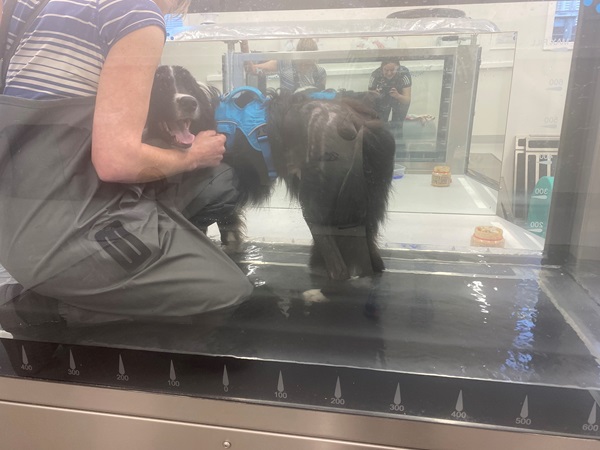
She also mentions hydrotherapy being a big help. “Hydrotherapy not only helped his recovery but got out all his energy. He was so tired afterwards that he would rest (so us humans also got a break!)”
Hydrotherapy involves water exercises to help dogs with rehabilitation, fitness, and overall well-being. It’s especially helpful for dogs recovering from surgery or injuries, as well as those with joint issues like arthritis.
Back in action after crate rest
Nelson recently had his 8 week check-up with his surgeon and is allowed to start going on walks again. He needs to build up to 30km to strengthen his muscles and then he should be back to normal.
Jacqueline mentions that her claims experience with PD Insurance was amazing.
“The staff I worked with handled my claim so unbelievably quick. I submitted the claim and then I had the money in my bank by the afternoon” she says. “This is so important as vets typically need to have a deposit and my deposit needed covered the amount given. I would definitely recommend PD Insurance for these reasons.”
PD Insurance paid out the maximum Accident Plan amount of $5,000, minus $200 for Jacqueline’s excess.
“I would just like to say, as I have been saying to everyone I know with a dog, get Accident and Emergency cover if nothing else!” She says.
How to help a dog on crate rest
Putting a dog on crate rest, especially an energetic puppy, can be challenging. That’s why we’ve put together a guide with useful tips and tricks on making it more bearable – check it out below.
We’ve also rounded up some of the most asked crate rest questions (with answers) 😊🐕
How to entertain a dog on crate rest?
Keeping your dog entertained on crate rest can be tricky, but it’s doable. You can use puzzle toys filled with treats or peanut butter (check they’re dog-safe). Rotate toys to keep things fresh, and consider giving chew toys that last longer.
Sedatives for dogs on crate rest?
If your dog is recovering from surgery and needs crate rest, ask your vet about sedatives that are safe during this time. They may prescribe the following:
Diazepam (Valium): This is sometimes used to help with anxiety or stress during periods of rest.
Acepromazine: This is a mild sedative often used to reduce anxiety and keep your dog relaxed.
Trazodone: It’s often prescribed for calming dogs, especially after surgery or during recovery periods.
Gabapentin: While mainly used for pain relief, it also has calming effects, which can be useful for crate rest.
Should I put a blanket in my dog’s crate?
Yes, you can put a blanket in your dog’s crate, as long as they’re not likely to chew or eat it. It provides comfort and makes the crate feel cosier. Just ensure the blanket doesn’t get tangled around your dog.
How to stop a dog peeing in their crate?
If your dog is peeing in the crate, it might be due to discomfort or needing more frequent potty breaks. Take them out more regularly for short, gentle walks or bathroom trips. Make sure the crate isn’t too big, as that can encourage accidents. You can also try using washable crate pads to manage accidents better. If the issue persists, talk to your vet in case it’s related to a medical issue.
Insurance for the unexpected
Without an Accident Plan, Jacqueline would have had to foot Nelson’s vet bills completely by herself. Having pet insurance can help you cover the cost of a wide range of unexpected vet visits.
Our Accident Plan is our most affordable and simplest insurance policy. It covers the basics, which includes accidents and third party liability benefits. And if you want more extensive cover that includes treatment for illnesses, you can always upgrade to our Classic or Deluxe Plans.
Get one or more months of FREE pet insurance when you buy your plan online. Click below to get a quote.