
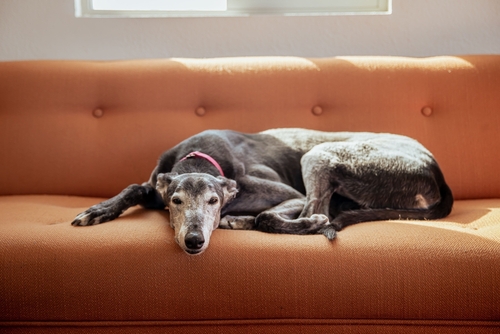
With the ban on Greyhound racing in NZ now in effect, somewhat 1,300 dogs need to be rehomed. So how about adopting a retired Greyhound? Contrary to what you may think, they don’t need huge amounts of exercise and are incredibly chilled.
“PD has strong relationships with Greyhound rehoming initiatives here in NZ and now more than ever, this might be the time to adopt.”– Michelle Le Long, PD Insurance COO
If you have a dog-shaped hole in your heart, a Greyhound may be just the fit. Find out more about the ban on Greyhound racing in NZ and what you need to know about Greyhound adoption in NZ.
In this article
- Ban on Greyhound racing in NZ announced
- Why is there a ban on Greyhound racing in NZ?
- When do racing Greyhounds normally retire?
- How much exercise do racing Greyhounds need?
- Retired Greyhounds as pets: yay or nay?
- Where to go for Greyhound adoption in NZ
- Greyhound key facts and stats
- Ban on Greyhound racing: NZ dog health issues?
- Pet insurance by pet people
Ban on Greyhound racing in NZ announced
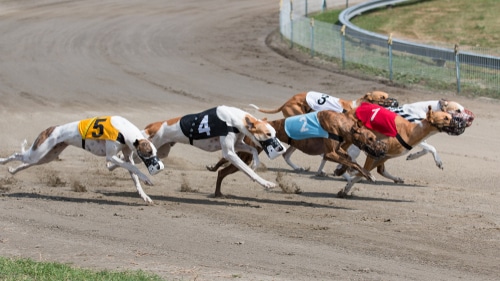
Until recently, New Zealand has been one of only seven countries in the world that still allows Greyhound racing. However, Racing Minister Winston Peters announced a plan to phase out the sport in December 2024, and Greyhound racing officially ended in NZ on the 31st of July 2026.
When the ban was first announced, the Government estimated about 2,900 racing Greyhounds would need to be rehomed, but that number has fallen considerably as rehoming has progressed.
As of late July 2026, around 1,300 Greyhounds were still expected to require rehoming. It described the challenge as significant but achievable and estimated that, at historical rehoming rates, they could be placed within roughly two years.
There’s another development worth watching: some dogs aren’t being rehomed in New Zealand at all. Reports today say up to 150 NZ Greyhounds are being transported to Queensland to continue racing in Australia.
Why is there a ban on Greyhound racing in NZ?
Many people who work in the Greyhound racing industry will be impacted by the ban, so what is the reason behind the decision?
Simply put, the ban is designed to protect the welfare of these dogs. Sadly, many are fatally injured during races and other forms of mistreatment have also been cited. In a single racing season, the following were reported:
- 224 Greyhound dogs were seriously injured
- 672 Greyhound dogs experienced minor/medium injuries
- 9 Greyhound dogs were euthanised because of racing injuries
The ban follows multiple critical reviews of the industry, starting in 2017. The 2017 report showed that nearly 1,500 racing Greyhounds were euthanised over four years. Watch the PD Pet Care vlog with Dr Cath to find out what happens during animal euthanasia.
When do racing Greyhounds normally retire?
Like human athletes, a Greyhound’s sporting career is short-lived. Most retire between two and four years old, which is very young! Once these kind-hearted hounds retire, they’re forced to find a new career path, ideally as the loving companion of a caring owner. Maybe you?
Even before the ban, several Greyhound adoption programs in NZ were already rehoming dogs. Now, with the ban on racing, thousands of dogs will need new homes in a limited span of time. Could an ex-racing Greyhound dog be waiting for your arms?
If, like many others, you thought these guys needed lots of exercise, we’re here to break this myth wide open. Find out why this isn’t true and a bunch more facts, right here…
How much exercise do racing Greyhounds need?
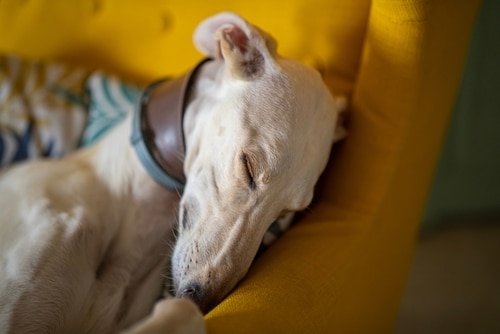
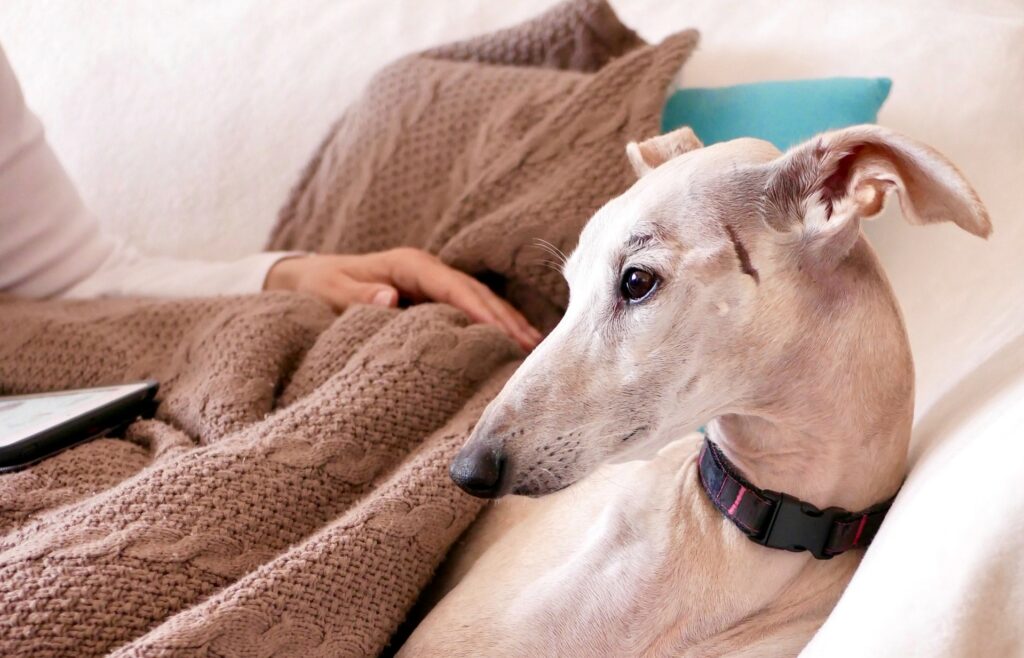
Because Greyhounds are fast, it’s a common misconception they love and need lots of exercise. In reality, they love nothing more than long naps, soft toys and indoor living.
Greyhounds need between 30 and 60 mins of daily exercise and would prefer short, fast runs over a long stroll. After one or two of these they’ll happily curl up under a blanket for the remainder of the day.
“Adopting a retired Greyhound means you inherit the whole Greyhound community. In Tauranga there is a group that meets up monthly to walk together in different locations around the city.” – Nicky, Bay of Plenty, PD Human-Pet Bond Survey
Retired Greyhounds as pets: yay or nay?
Greyhounds make excellent indoor pets and can easily enjoy apartment life. You’ll also be surprised to learn about these guys’ love of toys … Their rooms have been compared to “a little girl’s room” with many favourite fluffy toys! If you’re thinking of adopting, here’s more about these adorable dogs:
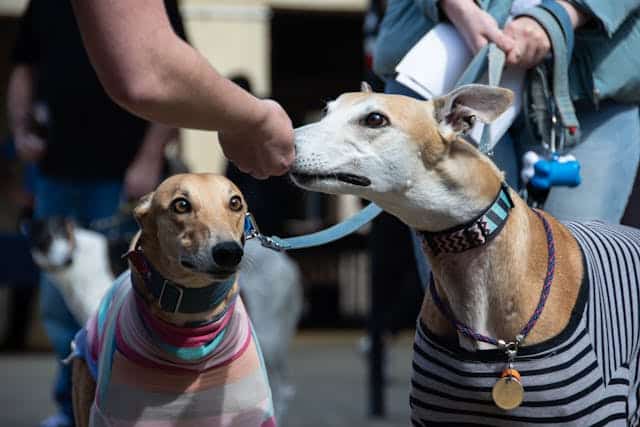
- Grooming. They have very short fur that barely sheds and, as a result, they get cold just like we do. Their minimal body fat makes them really sensitive to extreme chill or heat so winter warmers like dog jackets, jerseys and blankets are a must-have.
- Cleaning. Not only are they gentle, sweet and intelligent, they’re also often clean and quiet – fairly novel for a dog. They are wonderful pets for singles and families. Plus, if you aren’t big on toilet training your puppy, a retired Greyhound will likely have had basic training already.
- Greyhounds and other pets. In terms of other pets, they tend to get on with dogs but aren’t always keen on cats. This is probably because they’ve been bred to dash off after small animals. This is why you should never let them off-leash around small animals. Having said that, every Greyhound is his or her own person, so some may love cats.
Also, even though your Greyhound might like their own cat sibling, this won’t automatically endear them to the neighbour’s cat. If you decide to adopt a retired racing Greyhound, consider looking up a pet behaviourist to help them get settled in quickly.
Watch this PD Pet Care vlog for Dr Cath’s info on the difference between a dog trainer and pet behaviourist:
Where to go for Greyhound adoption in NZ
There are many Greyhounds adoption programmes already up and running in NZ. Most will facilitate each Greyhound’s transition from racer to companion animal. Often this includes training, health checks (helpful for you to know what your pet insurance will and won’t cover) and family checks.
This means they look for the perfect Greyhound personality to match yours.
Here are some organisations that work with Greyhound adoption in NZ (and you can Google many others):
Watch this video that shares a success story from the retired Greyhound adoption NZ program run by Greyhounds as Pets:
Greyhound key facts and stats
A Greyhound can run as fast as 72 km/h. You don’t want them dashing after someone’s cat or into the street where there’s traffic. It’s very important to teach your dog good recall for situations like this and to keep them on a lead. If you’re thinking of Greyhound adoption now that the ban of racing in NZ is in effect, then read about bringing home an adopted dog.
Greyhounds have a small head-to-neck ratio, making it easy for them to slip out of regular dog collars. Martingale collars are designed to prevent this and keep Greyhounds comfortable and safe, so always choose this kind.
Here are some more Greyhound facts:
| Lifespan | 10–14 years |
| Height | Males, 71-76 cm / Females, 68-71 cm |
| Weight | Males, 27-40 kg / Females, 25-34 kg |
| Coat | Short and low shedding |
| Colours | Red, blue, brindle, white, brindle, black, or a combo! |
Speaking of hounds, also learn about the Basset Hound dog breed.
Ban on Greyhound racing: NZ dog health issues?
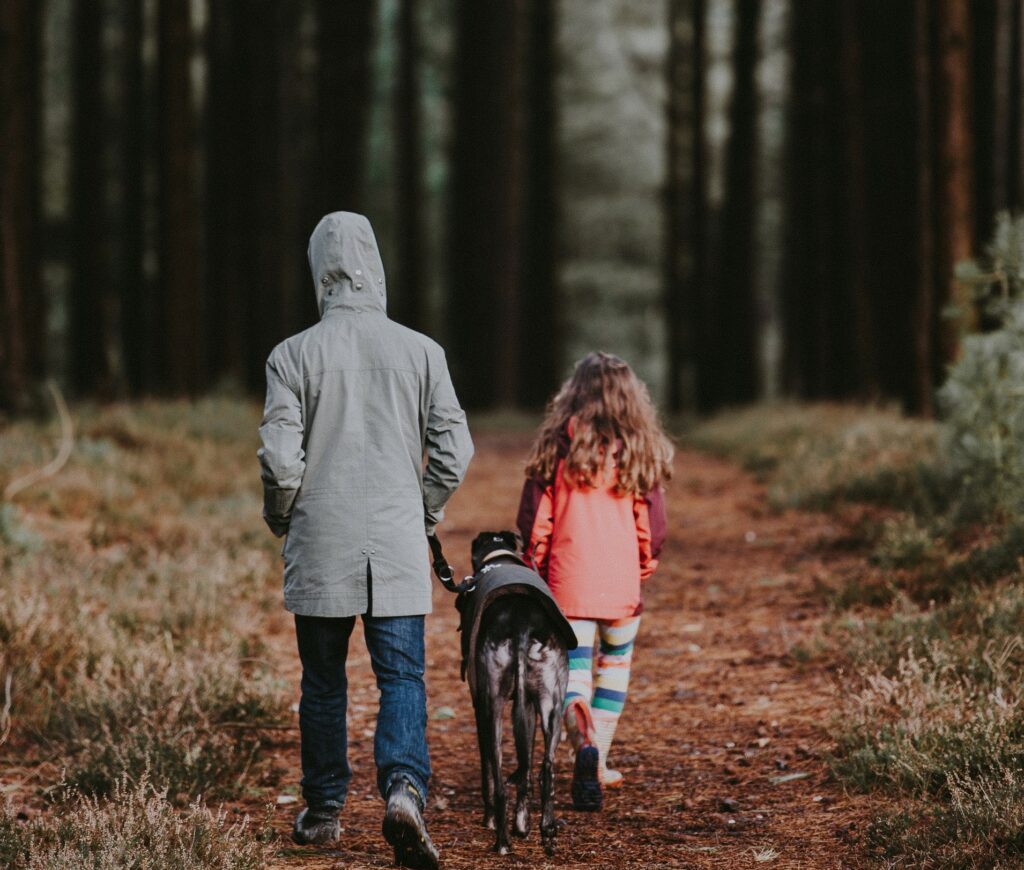
Breeders have used a fairly large gene pool to keep Greyhounds healthy and strong for racing, but like most purebred dogs, they can still be prone to several hereditary issues.
It’s advisable to find a vet that’s familiar with this breed, as Greyhounds can be sensitive to medicines other dogs aren’t. For example, they’re sensitive to some chemicals like tick and flea medicines. Have your vet recommend one that won’t cause irritation or allergies.
These guys are naturally lean and can get skin sores if they sleep on the bare ground. They’re designed to have soft bedding to keep in good shape. A furry-tale dog if ever there was one.
At PD, the most common claim types we see for Greyhounds include limb injuries, bite wounds, lameness, nail injury, pain, ingestion (accidentally swallowing something they shouldn’t) and ear infections.
Pet insurance by pet people
Like other dogs, Greyhounds can get sick or hurt – which could end up costing you a lot at the vet. PD is an award-winning brand* that offers pet insurance to soften the financial blow in their hour of need. Investing in a pet plan early on helps set your pet up for lifelong cover. PLUS you get 1 month free when you sign up.
*PD Insurance is the winner of the 2026 and 2023 MoneyHub Favourite Pet Insurer, 2024 Reader’s Digest Silver Pet Insurance, and Canstar’s 2022 Most Satisfied Customers – Pet Insurance awards.