
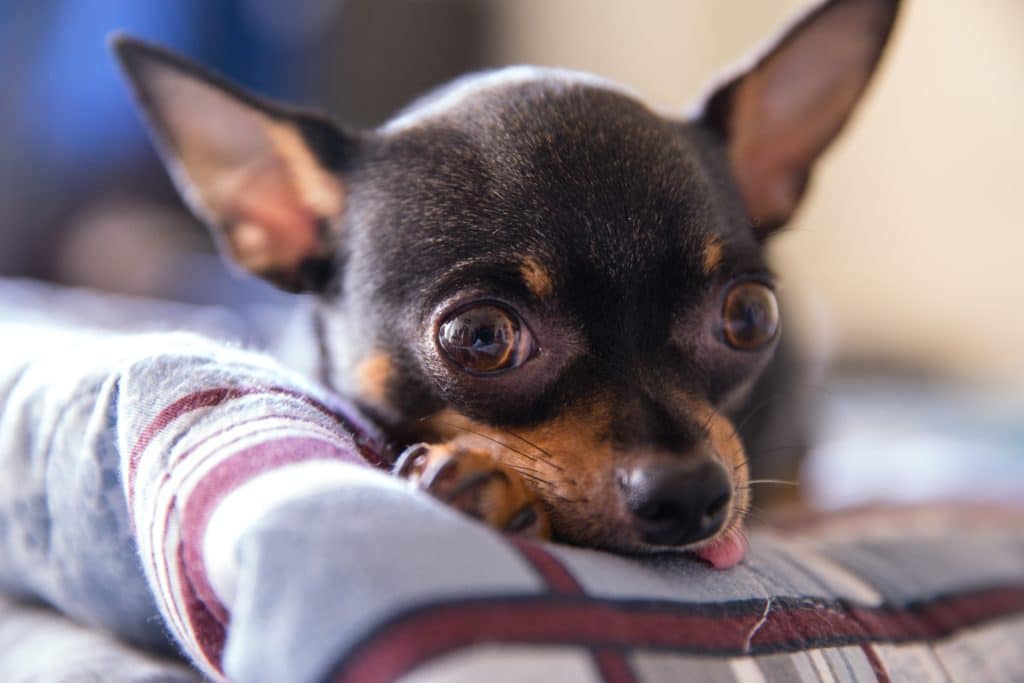
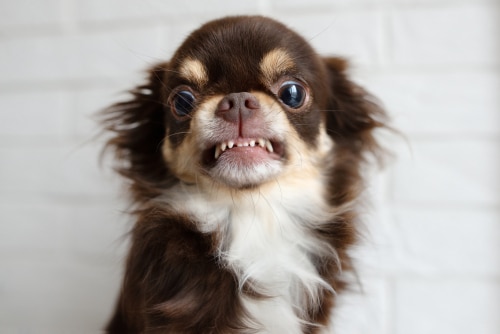
Ah, Chihuahuas. Despite being cute, intelligent, and ICONIC dogs (you’ve seen Beverly Hills Chihuahua, haven’t you?) they can sometimes get really mad. You know what we’re talking about – the toothy snarling, growling, barking and sometimes biting. An angry Chihuahua can get feisty!
But how aggressive are these dogs really? And what about angry Chihuahuas makes them so, well, angry? Below, we look at the ‘why’ around angry Chihuahuas, and what you can do to help them get less worked up. How to help ‘tame’ a Chihuahua info incoming …
In this article
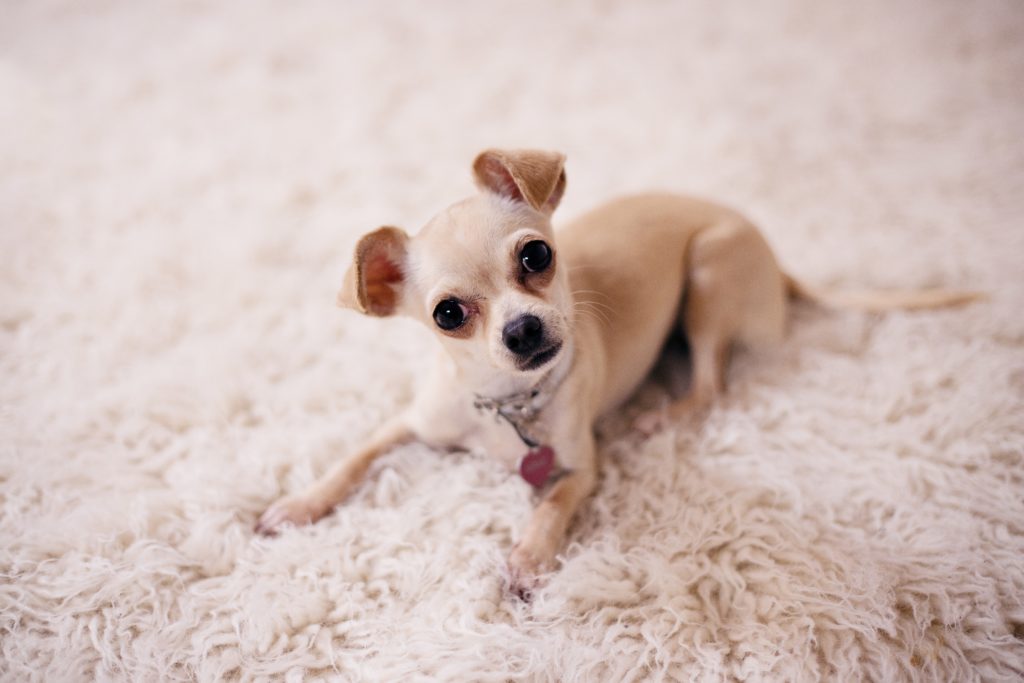
How aggressive are Chihuahuas?
So how feisty are these pups, really? This widely cited survey asked over 4,000 dog owners to self-report on how aggressive their dogs were in various situations. Not only did Chihuahuas came out as more aggressive than Pit Bulls, but they were reported as the most aggressive among 35 dog breeds! They’re especially feisty towards bigger dogs they haven’t seen before.
There’s an important caveat, though. As the article states:
None of the breeds were particularly aggressive. Chihuahuas peaked out at being moderately aggressive on some measures but were usually on the “sometimes aggressive” end of the spectrum. They only stood out because most other breeds—including pugs, collies and King Charles Cavalier Spaniels—were “seldom aggressive” or “never aggressive.”
So although they were rated as first in the study, Chihuahuas are more likely to show low-level signs of annoyance—like growling or snarling—rather than launching into full-on attacks.
Why do these cute dogs get so angry?
Nevertheless, Chihuahuas top the angry list. So why exactly is that?
Psychological factors
Well first off, Chihuahuas are tiny compared to most other dogs and people, so they’re more likely to feel threatened. What looks like aggression is often just defensive behaviour – growling, barking, or snapping to protect themselves.
Small dogs sometimes develop a “Napoleon complex” – overcompensating for their size by being louder or more confrontational. It’s a survival strategy more than anything.
Training and socialisation
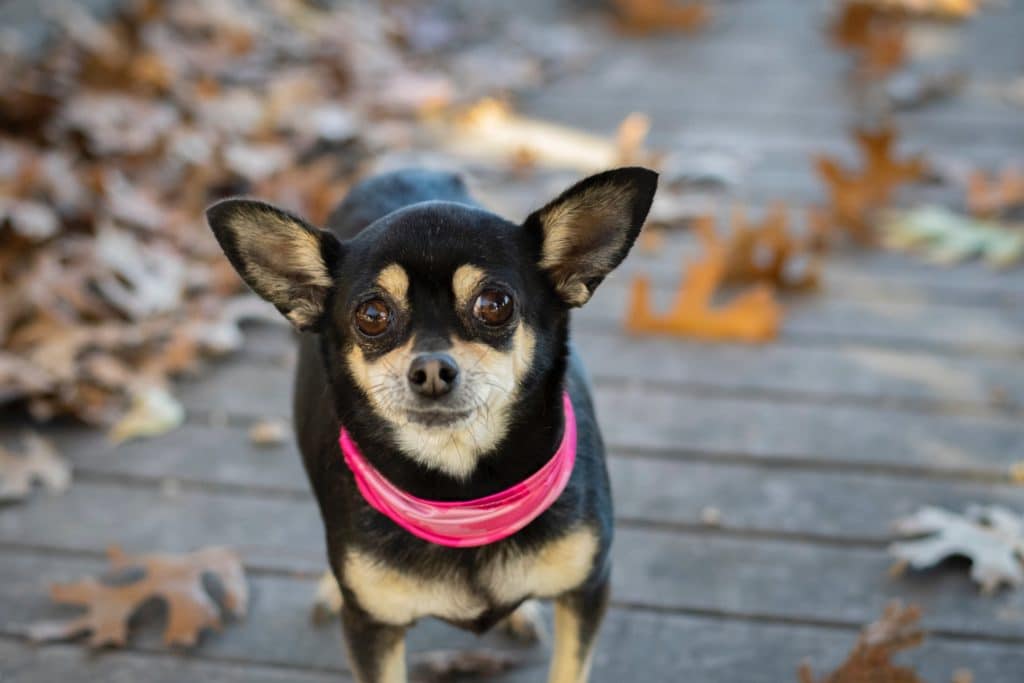
Many small dogs (not just Chihuahuas) don’t get the same level of training and socialisation as bigger breeds. Some pet parents may excuse their behaviour because “they’re small and cute” – so bad habits go unchecked.
Because they’re often lap dogs and live very closely to their owners, they may be more prone to guarding behaviour and aggression. You can curb these behaviours by socialising your pup early and practicing postive reinforcement training.
Chihuahuas are often lap dogs, living closely with their humans. This closeness can make them protective and sometimes a little possessive. Early socialisation and positive reinforcement training go a long way in helping them feel more secure and less reactive.
Environment and treatment
How a Chihuahua is raised matters:
- Dogs from puppy mills or abusive homes are more likely to be fearful and reactive.
- Chihuahuas who are spoiled or not taught boundaries may become possessive and demanding.
Health
These cute dogs are predisposed to some health problems that could cause them acute or constant pain. Animals in pain may be more irritable, anxious or confused – all which can lead to anger. Be sure to rule out any health issues that may be causing your Chihuahua to be irritable.
Our cute Chihuahuas are unfortunately predisposed to luxating patella, hypoglycemia, tracheal collapse and tooth and gum disease (all the more reason to get your Chihuahua pet dental insurance).
How to ‘tame’ a Chihuahua
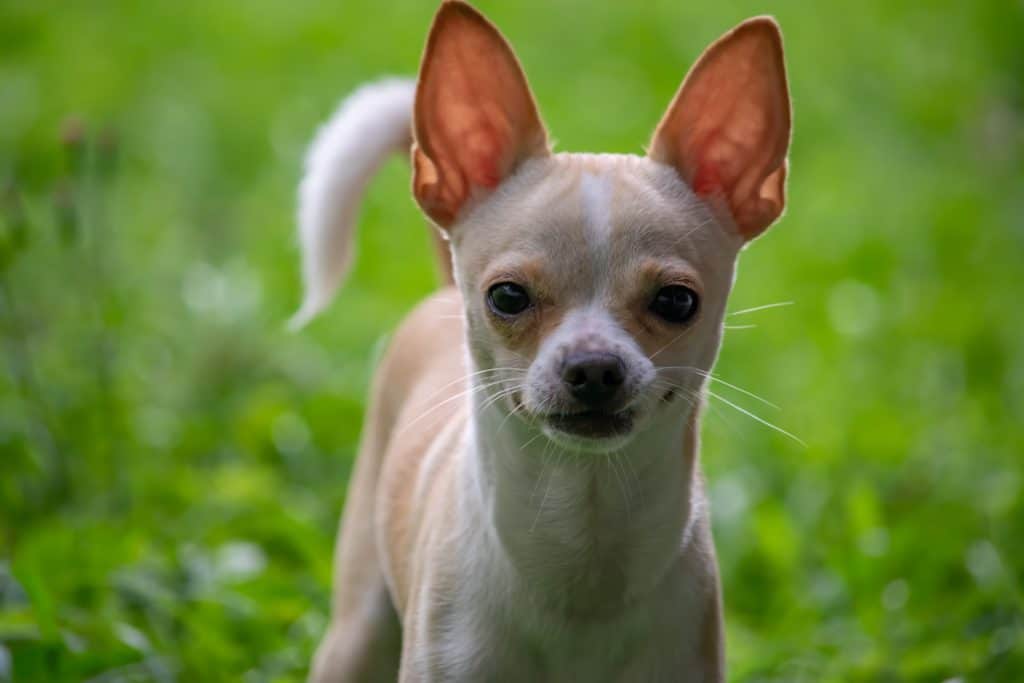
Chihuahuas don’t want to be angry or snappy. As mentioned above, there are several reasons they end up being irritable. It’s up to you as a Chihuahua parent to give them a happy, healthy environment that doesn’t spark unwanted behaviour.
With patience, understanding, and the right approach, you can guide your Chihuahua toward calmer, more confident behaviour.
Below are some practical tips on how to ‘tame’ a Chihuahua.. Remember that this article shares general tips and info, but it’s not the same as getting advice from a professional. Everyone’s situation is different, so it’s always a good idea to consult a dog behaviourist or other qualified expert before making any big decisions.
1. Rule out pain or health issues first
Before looking a their behaviour, you’ll first want to make sure your Chihuahua isn’t acting out because of pain, dental problems, or because they’re sick. A vet check-up is always a good starting point.
2. Give them a calm space
Noise and handling them too much can make your Chihuahua overstimulated. Give them a quiet, safe space that gives them some distance from what’s stressing them out and let’s them relax. Another option is trying a pheromone spray that brings down anxiety.
3. Look for the signs
Watch for early signs that they’re stressed or uncomfortable. This could show up as flattened ears, stiff posture, or lip licking. Respond before your pup escalates into aggression. This could include:
Giving them space
Remove whatever is causing stress, whether it’s another animal, person, noise, or object. Or you could move them away or block their line of sight.
Redirect with positive focus
Turn their attention to something familiar, like a rewarding activity like a simple cue (“sit”, “touch”), play, or sniffing game. This helps shift their focus and reassures them through a known routine.
Stay calm and don’t overreact
Don’t raise your voice or show you’re frustrated. Keeping a calm tone and body language will help reassure your dog that there’s no real threat.
4. Use positive reinforcement
Let your dog know when they’re doing well. This could be through praise or fiving them a treat. This is called positive reinforcement training. Never punish aggression – it often makes things worse. Instead, reward them when they choose to stay calm or walk away.
5. Socialise them slowly
If your Chihuahua isn’t used to new people or dogs, it’s important to expose them slowly and positively. Short, interactions are better than overwhelming ones.
Once they’re more used to other dogs, consider a doggy daycare to continue to help your angry Chihuahua socialise. In addition, it will prevent loneliness when you’re not around.
6. Teach basic cues
Simple cues like sit, stay, and leave it build trust and help redirect their focus. Consistent training builds confidence and reduces fear-based reactions.
7. Respect their boundaries
Don’t force cuddles or interaction if they’re feeling tense. Let them come to you when they’re ready – especially after a stressful situation.
8. Give them physical and mental activities
Being bored can make your Chihuahua act out. Like all dogs, they need to have their minds and bodies engaged Take them for walks or try puzzle games and other toys. A tired Chihuahua is a happy Chihuahua!
9. Stay the course
Tiny dogs have big feelings – but change takes time. Be patient and stick to a routine. Also keep in mind that every dog, regardless of size or cuteness level, should be treated the same. If big dogs aren’t allowed on the furniture, then small dogs shouldn’t have that privilege either. All’s fair in fur and paws.
Insure your feisty friend
Now you know a little more about how to tame a Chihuahua, but how about protecting them? Fiesty as they are, Chihuahuas aren’t immune from getting sick or hurt. Dog insurance gives you the peace of mind that you can take care of your fur-legged pup if something unexpected happens.
PLUS, PD Insurance gives you 1 MONTH FREE* pet insurance when you buy online. Click below to get a quote today.